
Division of Animal Behavior
Marlene Zuk Award for best talk: Sunishka Thakur
PHOTO:
Neural basis of alternative mating behaviors in swordtails
BLURB:
Elizabeth Adkins-Regan Award for best poster: Trina Chou 
Overwhelmed by choice – Consequences of choice overload in grey treefrogs
I am a third year Ph.D. candidate working with Dr. Jessie Tanner at the University of Tennessee, and am an active member of the Collaborative for Animal Behavior. I am broadly interested in the evolutionary pressures that shape animal acoustic signaling, such as mate selection, within-individual variation, and environmental contexts. I work with several species of chorus frogs and treefrogs around Knoxville, utilizing acoustic recordings and female phonotaxis behaviors as a measure of female preference.
Elizabeth Adkins-Regan Award for best poster runner-up: Makenna Juergens 
In my prime: Influence of parity on parental behavior strategies
Makenna is a current PhD student in the Wilsterman Lab at Colorado State University, where she studies behavior in the deer mouse (Peromyscus maniculatus). Specifically she is interested in identifying how behaviors change relevant to local adaption along elevational gradients. Makenna focuses on variation in maternal and stress behaviors and their physiological and endocrine underpinnings.
Division of Comparative Biomechanics
Wainwright and Koehl Award for best talk: Vaibhav Chhaya 
Convergent anatomical mechanisms of harmonic filtering in bat echolocation
I am a fourth-year PhD candidate working with Prof. Sharlene Santana at the University of Washington, Seattle. My dissertation examines multifunctional tradeoffs in the bat rostrum, with a particular focus on how internal nasal passage morphology influences both echolocation and thermoregulation. Using micro-CT scanning and computational modeling, my comparative research demonstrates how distinctive anatomical features of the bat nasal cavity, such as turbinal bones and paranasal spaces, filter outgoing sounds and potentially affect echolocation performance. At the same time, I am investigating whether these acoustic filtering properties trade off with the nasal cavity’s ability to regulate heat and moisture in respired air. To examine this tradeoff, I am quantifying nasal thermoregulatory performance across multiple, wild-caught bat species using a rapid-response thermometer that I designed and built—lovingly nicknamed the “HotBat 3.0.
Steven Vogel Award for best poster: Chloe Kaelin 
Lake Malawi cichlids outperform neotropical species in benthic feeding
I am a third-year undergraduate at UC Davis majoring in Evolution and Ecology. This summer, I studied the feeding performance of algae-scraping African Rift Lake cichlids with support from Peter Wainwright and the UC Davis EVE Scholars Fellowship. This project builds on research conducted by my graduate mentor, Khalil, who carried out the same experimental design on Neotropical cichlids over several months. Sharing the same methods allowed us to compare feeding performance between Mesoamerican and African cichlid lineages directly.
Division of Comparative Endocrinology
Audrey Gorbman Award for best talk: Josephina Fornara
PHOTO:
Using LC-MS/MS to assess steroid production in a territorial female bird after a GnRH challenge
My name is Josie (she/her), and I am a third-year PhD student in Kim Rosvall’s lab at Indiana University Bloomington. My dissertation focuses on the proximate causes and evolutionary consequences of complex social behaviors—specifically, female territorial aggression. My research explores how the ‘constellation of traits’ that make up an organism (e.g., gene expression, hormones, sex, lived experience, past and current environment) come together to shape individual differences in behavior, and I leverage molecular techniques, field experiments, and 10+ years of behavioral/demographic data to address these questions.
Audrey Gorbman Award runner-up: Isabel Villafuerte
PHOTO:
Marine heat wave conditions alter ovarian steroidogenesis in the eurythermal Sheepshead Minnow
BLURB:
Lynn Riddiford Award for best poster: Sarah Heissenberger
PHOTO:
Impacts of water availability on the endocrine stress response in free-living Octodon degus
I am a fifth-year PhD candidate at the University of Arkansas, where I am co-advised by Drs. Sarah E. DuRant and Carolyn M. Bauer of Swarthmore College. My research investigates how water availability affects individual physiology and social behavior of an arid-adapted rodent native to Chile, the common degu (Octodon degu). I am broadly interested in a mechanistic understanding of organismal responses to environmental challenges and how we can scale this information up using various modelling approaches to inform conservation.
Division of Botany
Rising Star in Botany Award for best talk:
PHOTO:
TITLE:
BLURB:
Rising Star in Botany Award for best poster:
PHOTO:
TITLE:
BLURB:
Division of Comparative Physiology and Biochemistry
Best student talk: Caroline Terry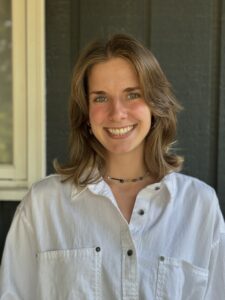
Assessing copepod metabolic responses to multiple stressors using a novel in vivo NMR approach
Caroline is a 5th year PhD Candidate in Dr. Wes Dowd’s Marine Environmental Physiology Lab in Washington State University’s School of Biological Sciences. Her dissertation work investigates the mechanisms underlying a non-additive interaction between high salinity and heat in the supratidal copepod Tigriopus californicus, where higher salinities increase thermal tolerance in the species. She connects whole-organism physiological responses like metabolic rate and activity with molecular responses like protein and metabolite abundance changes to better understand how this interaction occurs.
Best student poster: Yeaeun Park
Molecular cloning of putative NA+-K+-2Cl- cotransporter cDNAs in the copepod Eurytemora carolleeae
Yeaeun Park is a second-year PhD student in Environmental Sciences at The Ohio State University, where she is advised by Dr. Peter Piermarini. Her research specializes in the electrophysiology of ion transporters, primarily utilizing voltage clamp techniques. Currently, she is investigating how ion transporters in coastal copepods (Eurytemora carolleeae) adapt to freshwater environments. Yeaeun also obtained an MS from the Piermarini Lab. Her master’s thesis explored how the thermal activation of the TRPA1 irritant receptor influences repellent responses in mosquitoes (Aedes aegypti).
Division of Evolutionary Developmental Biology
Best student talk:
PHOTO:
TITLE:
BLURB:
Best student poster:
PHOTO:
TITLE:
BLURB:
Division of Ecoimmunology and Disease Ecology
Best student talk: Syeda Mehreen Tahir
PHOTO: DEDE Syeda Mehreen Tahir.jpg
High protein diet increases susceptibility of desert locust, Schistocerca gregaria to Metarhizium bi
Syeda Mehreen Tahir is a 5th year Ph.D. candidate in Environmental Biology at Arizona State University working with Dr. Jon Harrison and Dr. Arianne Cease. Her research focuses on nutritional immunology, examining how dietary protein-to-carbohydrate ratios shape immune function and disease outcomes. Using a multi-omics approach that integrates physiological assays, transcriptomics, and metabolomics, her work explores trade-offs between immune investment and pathogen susceptibility, with broader implications for host–pathogen interactions in variable nutritional environments. Mehreen is currently seeking postdoctoral opportunities and would be delighted to hear from potential collaborators or mentors at smtahir2@asu.edu.
Best student talk runner-up: Kristen Rosamond
PHOTO: DEDE Kristen Rosamond.jpeg
Impact of gut microbiome modulation on nesting house sparrow physiology
I am a Ph.D. candidate in the Biology Department at the University of Missouri-St. Louis. My dissertation research incorporates both field and laboratory experiments with wild sparrow nestlings to investigate how disruptions to the gut microbiome and immune system affect host physiology.
Best student poster: Rosemary Westcott
PHOTO: DEDE Rosie Westcott.jpg
Preparing for battle: Impacts of pond water on tadpole microbiome, immune priming, and development
I am a 3rd-year PhD candidate in Dr. Sarah Woodley’s lab at Duquesne University studying the gut microbiome and its impact on host immune function and development in tadpoles. At SICB 2026, I presented some exciting results that showed altered baseline immune gene expression in the guts of tadpoles raised in autoclaved (microbially depleted) or natural (microbially rich) pond water that correlated with measures of gut alpha diversity, suggesting differential immune priming by these two microbial communities. I also found that tadpoles raised in autoclaved pond water had more severe scoliosis than those raised in natural pond water, which was a surprise result that sparked a lot of conversation during the poster session!
Best student poster runner-up: Chloe Poenisch
PHOTO: DEDE Chloe Poenisch.jpeg
A new method to assess host-pathogen dynamics in Astrangia poculata
Chloe Poenisch is a first-generation college student from Portland, Texas, and an undergraduate at Texas State University. She plans to graduate in December 2026 with a B.S. in Aquatic Biology and a minor in Horticulture. In Dr. Fuess’s lab, her research centers on host immunity and symbiosis in Astrangia poculata, where she contributes to efforts to better understand how shifts in algal symbiont density influence coral responses to pathogenic stress. Her work involves supporting the design and implementation of experimental pathogen challenges and assisting with the development of methods that improve reproducibility to assess coral immune function. She currently supports the lab as an aquatic husbandrist by maintaining stable conditions for coral and other cnidarian cultures used in ongoing experiments. She hopes to apply her research experience to future work on cnidarians, porifera, and host–microbe dynamics, eventually pursuing a Ph.D. after gaining experience as a laboratory technician. Outside of academics, Chloe enjoys reading, traveling, and freshwater aquarium care.
Division of Ecology and Evolution
Ray Huey Award for best student talk: Yaraldi Loera
PHOTO: DEE_Loera.jpg
Selection on alligator ovarian physiology after generations of xenoestrogen exposure in the wild
Yeraldi is a fifth-year PhD candidate in Dr. Shane Campbell-Staton’s lab at Princeton University, where she studies evolutionary responses to anthropogenic stressors in wildlife. Her research integrates theories and approaches from evolutionary biology, ecotoxicology, functional transcriptomics, population genetics, and conservation science to capture both the signatures and mechanisms of selection across multiple levels of biological organization. She presented her primary thesis research, “Evolution to Pollution: Selection on ovarian physiology following chronic xenoestrogen pesticide exposure in wild alligators,” which combines field- and laboratory-based approaches and reflects her commitment to interdisciplinary collaboration and mentorship.
Ray Huey Award honorable mention: Jon Merwin
PHOTO: DEE_Jon.png
Whole genomes and community science images reveal the genetics of visual mimicry in toucans
Jon Merwin is a PhD candidate working with Dr. Jason Weckstein at Drexel University. He is particularly interested in convergent evolution and collections-based research. For his project, he used whole genome sequencing of museum specimens and a new method he developed to collect color measurements from community science photographs to identify the genetic basis of mimicry in Ramphastos toucans.
Ray Huey Award for best student poster: Brayden Fracassa
PHOTO: DEE_Brayden.jpg
Investigating probiotic potential of Pseudoalteromonas rubra in multiple invertebrate species
Brayden Fracassa is a senior at Roger Williams University working with Dr. Koty Sharp in the Coral Microbial Biotechnology Lab. He is developing Pseudoalteromonas rubra, a potential probiotic isolated from a crustose coralline algae (CCA), investigating its ability to protect larvae of the eastern oyster, Crassostrea virginica, against the pathogen Vibrio coralliilyticus. He used laboratory experiments to determine how P. rubra can be best deployed to protect oyster larvae in culture fromV. coralliilyticus. While oysters exposed toV. coralliilyticus alone exhibited nearly 100% mortality, larvae pre-treated with P. rubra before Vibrio exhibited survival rates of 99%. Post-treatment by P. rubra produced a slight increase in survival but was not as effective as pre-treatment.P. rubra did not impact growth rate of Tisochrysis lutea, a common oyster algal feed. Ongoing work focuses on scaling up this work for oyster aquaculture operations in the Roger Williams University CEED’s Shellfish Hatchery in the upcoming season.
Ray Huey Award honorable mention: Erica Ro
PHOTO: DEE_Ro.JPG
Hot on the trail: Temperature-driven genetic variation in invasive green crab populations
Erica is a senior undergraduate at UCLA majoring in Environmental Science with a concentration in Conservation Biology. She is broadly interested in conservation genomics, population biology, and evolution under anthropogenic change. As a Summer Student Fellow at Woods Hole Oceanographic Institution, Erica investigated genetic drivers of global thermal adaptation in the highly invasive European green crab, identifying a recently described supergene as a likely contributor. She aims to pursue a PhD and a research career using genetic and molecular tools to inform the conservation, restoration, and management of vulnerable wildlife.
Division of Invertebrate Zoology
Mary Rice Award for best talk: Caitlin BrabbleRose
PHOTO: DIZ_Caitlin_BrabbleRose.jpg
Mother knows best: influence of maternal cues on embryonic development in the Atlantic fiddler crab
My name is Caitlin BrabbleRose and I am a Ph.D. Candidate at the University of North Carolina at Charlotte working with Dr. Paola López-Duarte. My research focuses on the internal clocks of intertidal crustaceans, embryo-female physiochemical communication, and maternal effects on developmental synchrony and hatching success in the fiddler crab, Leptuca pugilator.
Alan Kohn Award for best poster: Cailey Plainte
PHOTO: DIZ Cailey Plainte.jpg
Morphological changes from nauplius to cyprid provide hydrodynamic benefits to barnacle settlement
My name is Cailey Plainte (she/her), and I am a third-year undergraduate student at Simmons University who conducted research at the University of Washington. My research to date has primarily focused on how developmental shifts in barnacle larvae affect their hydrodynamics, but as I consider what I’d like to study in graduate school, I am increasingly interested in exploring how climate change impacts phenology and how this affects mutualism in pollinating insects.
Alan Kohn Award honorable mention: Yoshigei Diaz Hernandez
PHOTO: DIZ Yoshigei Diaz Hernandez.png
Thermal and symbiotic regulation of pedal lacerate development in Exaiptasia diaphana
Hello! I’m Yoshigei Diaz Hernandez, a sophomore majoring in Biochemistry and Molecular Biology, and an undergraduate research assistant at the Weis Lab at Oregon State University. My research focuses on the symbiotic relationship between algae and cnidarians undergoing heat stress at the molecular and cellular level.
Wenner Award: N/A
PHOTO: N/A
Division of Neurobiology, Neuroethology, and Sensory Biology
Best student talk: Alex Gurgis
PHOTO: DNNSB_Alex_Gurgis.avif
Ostracod brain anatomy: evidence for ancestral mushroom body and central complex in Pancrustacea
As a PhD candidate in the Wolff Lab at Case Western Reserve University, I study the evolution of arthropod brains to better understand common patterns in neural circuitry, as well as how changes in the brain can support species-specific behaviors. My current research focuses on learning and memory structures called mushroom bodies. I am studying their neuroanatomy in ostracods, a taxon sister to all other crustaceans and insects, to determine their evolutionary origins in Pancrustacea, as well as comparing their morphology across snapping shrimp with a diversity of social behaviors to examine the relationship between mushroom body complexity and sociality.
Best student talk honorable mention: Dana Lim
PHOTO: DNNSB_Dana_Lim.HEIC
Can the sea turtle magnetic map sense detect magnetic field polarity?
I am a Biology PhD candidate in the Lohmann Lab at the University of North Carolina at Chapel Hill. My research studies magnetic sensing in young loggerhead sea turtles. Specifically, my work uses behavioral assays to investigate questions around the physical bases of magnetoreception, the functional capabilities of this sensory system, and the development of adaptive responses to magnetic field cues.
Best student poster – graduate student: Nichole Procter
PHOTO: DNNSB_Nichole_Procter.jpg
Season and social cues influence patterns of circadian gene expression in green treefrogs
I am a PhD candidate working with Deborah Lutterschmidt at the University of California, Irvine and am planning to pursue a teaching and research-focused career. My research examines how non-light environmental cues, such as social signals, including reproductive communication, interact to influence circadian gene expression in green treefrogs. Using an integrative framework that combines behavioral, molecular, and physiological approaches, my work aims to understand how internal biological clocks are aligned with reproductive timing and dynamic environmental conditions.
Best student poster – undergraduate student: Madeline Nobert
PHOTO: DNNSB_Madeline_Nobert.png
Wind gusts impact the phase selectivity of insect wing mechanosensory neurons
I am a senior Biology undergraduate at Bryn Mawr College focusing on animal behavior and neurobiology. My current research in the Weber Lab focuses on the neurological mechanics of flight in the Carolina Sphynx hawkmoth, Manduca sexta. I use an intracellular probe to record neural activity directly from the wing nerve of moths while manually moving the wings to simulate flight. Our aim is to understand how wing surface strain sensors react to flapping movement, and the mechanisms behind movement as complex as flight.
Division of Phylogenetics and Comparative Biology
Wake Award for Best student talk (tie): Menna Jones
PHOTO: DPCB_Menna_Jones.jpeg
Developmental mode and anuran functional trait evolution: inferences from novel comparative methods
Hello! I’m Menna, a 3rd-year PhD candidate at The University of Chicago. My interests lie in leveraging novel comparative methods to better understand the processes generating macroevolutionary patterns, with a specific focus on the interplay between adaptation and constraint. I choose to explore this topic using the study system of Anura (i.e., frogs!) because I am fascinated by how, despite the conservation of the ancestral bauplan, an impressive breadth of morphologies, ecologies, and reproductive modes have evolved across the clade. (Plus, frogs are just pretty cool…🐸)
Wake Award for Best student talk (tie): Linnea Lungstrom
PHOTO: DPCB_Linnea_Lungstrom.HEIC
Phylogenetic relationships and the evolution of fin and body shape in the surgeonfishes
I am a 5th year PhD candidate in the Committee on Evolutionary Biology at the University of Chicago/Field Museum. Broadly, I am interested in how and why complex and integrative biological systems evolve. My dissertation research focuses on a specific case study: the venom delivery system in surgeonfishes (Acanthuridae). I combine morphological, venomic, behavioral, and biomechanical studies with phylogenetic comparative methods to investigate how multiple axes of variation interact to facilitate or constrain evolution in this unique clade.
Wake Award for Best Student Poster: Olivia May Tatro
PHOTO: DPCB_Olivia_Tatro.heic
Gene gain and loss events inform the evolution of symbiosis and lineage-specific traits in Cnidaria
Olivia is a senior undergraduate at the University of New Hampshire studying gene gain and loss dynamics in Cnidaria in Dr. Dave Plachetzki’s lab. She is majoring in biology with a minor in genetics and has a special interest in bioinformatics and computational biology. Olivia’s current research project investigates how novel genes give rise to complex traits in cnidarians, such as cnidocytes and endosymbiotic relationships, and which cell types these genes are highly expressed in. Olivia is planning to pursue a PhD to study the evolution and development of cnidarians.
Division of Vertebrate Morphology
D. Dwight Davis Award for Best student talk: Miranda Margulis Ohnuma
PHOTO: DVM_Miranda Margulis-Ohnuma.png
Testing for functional regionalization in the snake vertebral column
I am a vertebrate paleontologist and second-year PhD student in the Bhullar Lab in Yale University’s Earth and Planetary Sciences department. My thesis research investigates the origins and persistence of the tetrapod body plan, with a focus on the limb girdles and regionalized spine. I presented a new perspective on snake intervertebral joint anatomy, which uses ex-vivo XROMM to reconcile the apparent conflict between regionalized vertebral morphology and consistent joint function along the snake spine.
D. Dwight Davis Award for Best student talk honorable mention: Danielle Adams
PHOTO: DVM_DanielleAdams.JPG
Evolution of bone material properties in the skulls of artiodactyls and cetaceans
I completed my PhD with Drs Rick Blob and Sam Price at Clemson University. My research aims to understand how diversity governs mammal ecology and evolution, specifically how marine mammals meet the demands of their extreme habitat. I integrate cetacean functional morphology and biomechanics, as well as materials science and testing. Additionally, I decipher large-scale patterns in mammal morphology, and its relationship with ecological traits, within a phylogenetic comparative framework.
Karel Liem Award for Best Student Poster: Samantha Trail
PHOTO: DVM_Sam Trail.jpg
The right tool for the job: ontogenetic shifts in morphology and early sea turtle dispersal
I am a 5 th year PhD candidate in Jeanette Wyneken’s lab at Florida Atlantic University. I am broadly interested in the ‘hows’ and ‘whys’ of animal movement from various perspectives (biomechanics, morphology, behavior). My current research focuses on sea turtle swimming and how the powerstroke (often referred to as “aquatic flight”) differs across life stages and species. By comparing flipper morphometrics and kinematic force production patterns of loggerhead and leatherback sea turtles at different life stages, we are teasing apart how locomotor traits relate to the two species’ divergent life histories.